Source Electrical Rearview Car Mirror for Cars Trucks Motorcycles
Explore 30 listings for Electrical Rearview Car Mirror options featuring glass or plastic frames, various sizes, and customizable angles. Buyers can compare specifications like view angles, pixel counts, and control types from suppliers in China.
Key considerations
Products List



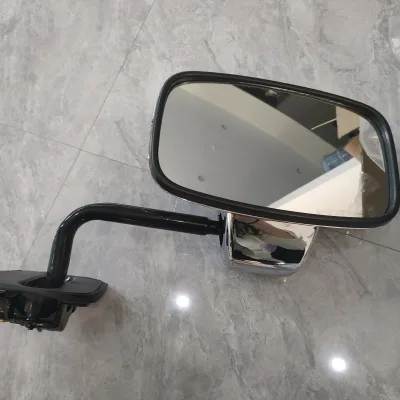


Comprehensive Sourcing Guide
Strategic Sourcing Guide for Electrical Rearview Car Mirrors
Understanding Technical Specifications and Variability
When sourcing electrical rearview car mirrors, buyers must navigate a landscape defined by significant technical variability rather than a single standardized product. The core keyword "Electrical Rearview Car Mirror" encompasses a diverse range of components, from blind spot assist mirrors to integrated camera systems, each with distinct operational parameters. A primary observation in the current market is the variation in controlling types. While the specific product data highlights "Electrical" as a key attribute for certain units, other listings in the same category specify "Manual" controlling types. This indicates that the term "electrical" in a search query may inadvertently surface non-electrical alternatives, necessitating rigorous filtering during the initial supplier screening phase.
The physical dimensions and optical properties are equally critical variables. The observed product data reveals size specifications ranging from 2.0 inches to 2.5 inches, with some listings offering fully customized dimensions. The mirror types themselves vary significantly, including double curvature mirrors, spherical mirrors, and flat mirrors. Each type serves a different functional purpose; for instance, double curvature mirrors are often designed to reduce blind spots, while flat mirrors provide a direct, undistorted reflection. The view angle is another critical specification that fluctuates across the market, with observed data showing options for both 120° and 360° coverage. Buyers must align these optical characteristics with the specific vehicle architecture and safety requirements of their target market.
Furthermore, the pixel count associated with these units varies widely, with observed data citing figures such as 100 Million, 500 Million, and 1200 Million pixels. This metric is particularly relevant for digital rearview mirror systems that utilize cameras and displays rather than traditional glass. The material composition also differs, with some units constructed from ABS+Glass composites, while others utilize glass mirrors with plastic frames. The finish options, including silver, blue, chrome, aluminum, and standard mirror coatings, further complicate the selection process. A comprehensive sourcing strategy requires a detailed technical matrix that maps these attributes against the specific engineering requirements of the intended application, whether for cars, trucks, motorcycles, or general motor vehicles.
Compliance and Certification Verification
Navigating the regulatory landscape is a non-negotiable aspect of sourcing automotive components. The supplied product data indicates a range of certifications, including CE, ISO, FCC, ECE, and DOT. However, the presence of these certifications in a product listing does not guarantee that every unit from a specific supplier meets these standards. Buyers must treat these as observations of specific listings rather than universal guarantees for the entire product category. The "CE" and "ISO" standards appear frequently in the data, suggesting they are common benchmarks for European and international markets. Additionally, the "ECE" and "DOT" certifications are critical for vehicles operating in Europe and North America, respectively, as they address specific safety and performance requirements for road-legal equipment.
The data also references specific product standards such as "R150," which likely pertains to a specific regulatory framework or internal quality benchmark. When evaluating suppliers, procurement teams must verify that the certification documents provided are current, valid, and applicable to the specific model being purchased. It is essential to distinguish between general company certifications and product-specific testing results. For electrical components, the "FCC" certification is particularly important to ensure that the device does not emit harmful electromagnetic interference. Buyers should request test reports that explicitly link the certification to the specific product model, such as the "HAVI 777" or "car blind spot mirror" models mentioned in the data, to ensure traceability.
Cost Drivers and Pricing Dynamics
The pricing structure for electrical rearview car mirrors is influenced by a complex interplay of factors, including customization, material quality, and order volume. The observed price range in the market spans from $0.07 to $130 USD, a disparity that reflects the vast difference between simple manual glass mirrors and complex, high-resolution digital systems with advanced electronics. The lower end of the price spectrum likely corresponds to basic glass mirrors with minimal electronic integration, while the upper end encompasses units with high pixel counts, specialized coatings, and robust electrical control systems.
Order volume is a significant determinant of cost, as evidenced by the observed Minimum Order Quantity (MOQ) range of 1 to 40,000 units. Suppliers often offer tiered pricing structures where the unit cost decreases significantly as the order volume increases. For buyers with lower volume requirements, the unit price may be higher, and the MOQ might be flexible, as seen in listings with an MOQ of 1. Conversely, large-scale procurement for mass-market vehicles may require commitments closer to the 40,000-unit threshold to access the most competitive pricing. Customization is another major cost driver. The data confirms that customization is available for size, color, and specifications. However, custom orders typically incur higher tooling costs and longer lead times, which can impact the overall budget.
Payment terms also play a role in the financial dynamics of the transaction. The observed data lists "Tt/West Union/Paypal" as accepted payment methods. While these offer flexibility, they may come with different fee structures or security implications compared to traditional letters of credit or bank transfers used in high-value B2B transactions. Buyers should factor in the total cost of ownership, including shipping, insurance, and potential tariffs, which can vary based on the origin of the goods. The data indicates origins in "Qingdao Shandong" and "China Mailand," suggesting that logistics costs will depend on the specific port of departure and the destination market.
Typical Applications and Market Segmentation
Electrical rearview car mirrors serve a broad spectrum of applications, ranging from passenger vehicles to heavy-duty commercial transport. The product data explicitly lists applications for "Car, Truck, Motorcycle, and Motor Vehicle," indicating a versatile market reach. For passenger cars, the focus is often on safety and convenience, with features like blind spot monitoring and wide-angle views becoming standard expectations. The "Double Curvature Mirror" and "Spherical Mirror" types mentioned in the data are particularly relevant for these applications, as they help mitigate blind spots without the distortion associated with convex mirrors.
In the commercial trucking sector, the requirements shift towards durability and visibility in challenging conditions. The "Durable Time" of 10 years cited in the data suggests that high-quality units are designed to withstand long-term exposure to the elements. The "Position" attribute, which includes both "Outside" and "Inside" configurations, highlights the versatility of these products. Outside mirrors are critical for rear visibility and blind spot detection, while inside mirrors may integrate with rear-facing cameras for enhanced situational awareness. The "Modern" style and "Silver" finish observed in the data reflect current aesthetic trends, but functionality remains the primary driver for commercial applications.
Motorcycle applications present unique challenges due to the smaller form factor and higher vibration levels. The data indicates that these mirrors must be robust enough to handle such conditions while providing a clear view. The "1200 Million" pixel count observed in some listings may be particularly relevant for high-end motorcycle systems that integrate digital displays. Buyers targeting these segments must ensure that the selected mirrors meet the specific mounting and electrical requirements of the vehicle type, as a mirror designed for a car may not be suitable for a motorcycle without significant modification.
Supplier Evaluation and Origin Analysis
Evaluating suppliers requires a deep dive into their operational capabilities and geographic origins. The product data identifies "Qingdao Shandong" and "China Mailand" as key production locations. Qingdao is a major hub for automotive parts manufacturing in China, known for its logistical advantages and established supply chains. "China Mailand" likely refers to a specific manufacturing zone or a misinterpretation of a location, but it underscores the importance of verifying the actual factory address. Buyers should prioritize suppliers with transparent manufacturing processes and a proven track record in the automotive sector.
The "Brand" attribute in the data lists "TYPER," which serves as an example of a manufacturer or distributor name. However, buyers should not rely solely on brand recognition. Instead, they should assess the supplier's ability to provide customization, as the data confirms that "Customization" and "Customized" options are available. This capability is crucial for buyers looking to integrate mirrors into specific vehicle models or to meet unique design requirements. The "Finish" process, described as "Silver," and the "Frame Material" of "Plastic" or "ABS+Glass" should be verified through sample inspection to ensure they meet quality expectations.
Packaging is another critical aspect of supplier evaluation. The data shows a variety of packaging methods, including "Wooden Crates," "Hard Card Box," "Slip by Paper," and "Seaworthy" packaging. The choice of packaging depends on the fragility of the product and the shipping method. For high-value electronic mirrors, "Strong Wooden Crates" or "Plywood Crates" are preferred to prevent damage during transit. Buyers should request packaging specifications that align with their logistics requirements to minimize the risk of loss or damage. Additionally, the "MOQ" of 2000 PCS observed in some listings suggests that some suppliers may have higher volume thresholds, which could be a barrier for smaller buyers.
Quality Control and Long-Term Procurement
Ensuring consistent quality is paramount when sourcing electrical rearview car mirrors. The "Durable Time" of 10 years cited in the data sets a high benchmark for product longevity. To verify this claim, buyers should implement a rigorous quality control protocol that includes material testing, electrical performance checks, and environmental stress testing. The "Pixel" count, ranging from 100 Million to 1200 Million, must be validated to ensure that the digital components function as advertised. Visual inspection of the "Mirror Type" and "Coated" surfaces is also necessary to confirm that the finish is uniform and free from defects.
Long-term procurement considerations involve building a sustainable relationship with suppliers who can scale with demand. The "Customized" nature of many products means that suppliers must have the flexibility to adapt to changing requirements. Buyers should establish clear communication channels and agree on quality assurance standards before placing large orders. The "Standard" specifications, such as "230450" or "305407," should be documented in the contract to ensure that the delivered products match the agreed-upon dimensions. Furthermore, the "Payment" terms, including "Tt/West Union/Paypal," should be structured to protect both parties, with milestones tied to quality inspections and delivery schedules.
In conclusion, sourcing electrical rearview car mirrors requires a meticulous approach that balances technical specifications, regulatory compliance, cost efficiency, and supplier reliability. By leveraging the observed data and applying rigorous evaluation criteria, buyers can navigate the complex market and secure high-quality components that meet their specific needs. The variability in attributes, from pixel counts to mirror types, underscores the importance of detailed due diligence and clear communication with suppliers to ensure successful procurement outcomes.
FAQs
What certifications are available for electrical rearview car mirrors?
Available certifications include CE, ISO, FCC, ECE, and DOT. These standards verify compliance with safety and electromagnetic regulations for European and North American markets.
Which mirror types are offered for different vehicle applications?
Options include double curvature, spherical, and flat mirrors. These types serve various functions such as reducing blind spots or providing undistorted reflections for cars and trucks.
How can I find suppliers with customized size and color options?
Customization is available for size, color, and specifications. Buyers can request specific dimensions like 2.0 inch or 2.5 inch along with preferred colors such as white or silver.
What is the typical durability period for these automotive parts?
The durable time is listed as 10 years for high-quality units. This longevity ensures the mirrors withstand long-term exposure to environmental elements and vehicle vibrations.
Can I source mirrors with specific pixel counts for digital systems?
Pixel counts range from 100 Million to 1200 Million for digital units. These metrics apply to camera-integrated systems rather than traditional glass mirrors used in standard vehicles.
What packaging methods are used for shipping these auto parts?
Packaging includes wooden crates, plywood crates, and seaworthy options. Strong wooden crates are often used to protect fragile electronic components during transit to international destinations.